🎯 Featured Case Study · Solo Project

Knovyra — Agentic Enterprise Intelligence Platform

Multi-step agent investigations with cited evidence, human approval gates, and reusable knowledge
Solo project · Built 2026 · All company data is synthetic
Problem System Flow Tech Stack Trade-offs My Role Features Challenges Impact Demo

Problem Background

System Flow

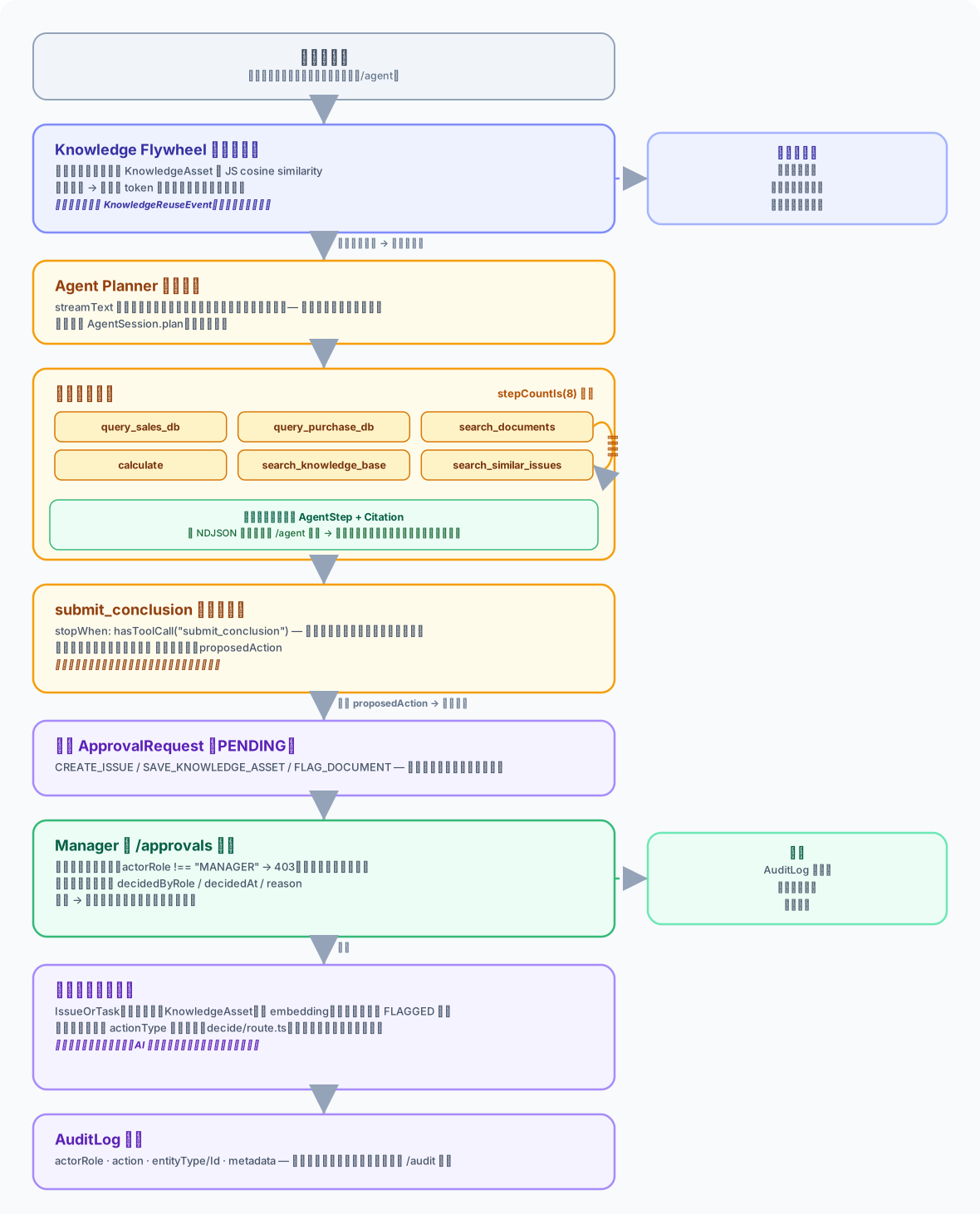
Knovyra system flow diagram
One full request lifecycle: user question → Knowledge Flywheel similarity check → Agent Planner → tool-call loop (6 tools, capped at 8 steps) → submit_conclusion → ApprovalRequest (PENDING) → Manager decision at /approvals → write only after approval → AuditLog

Tech Stack

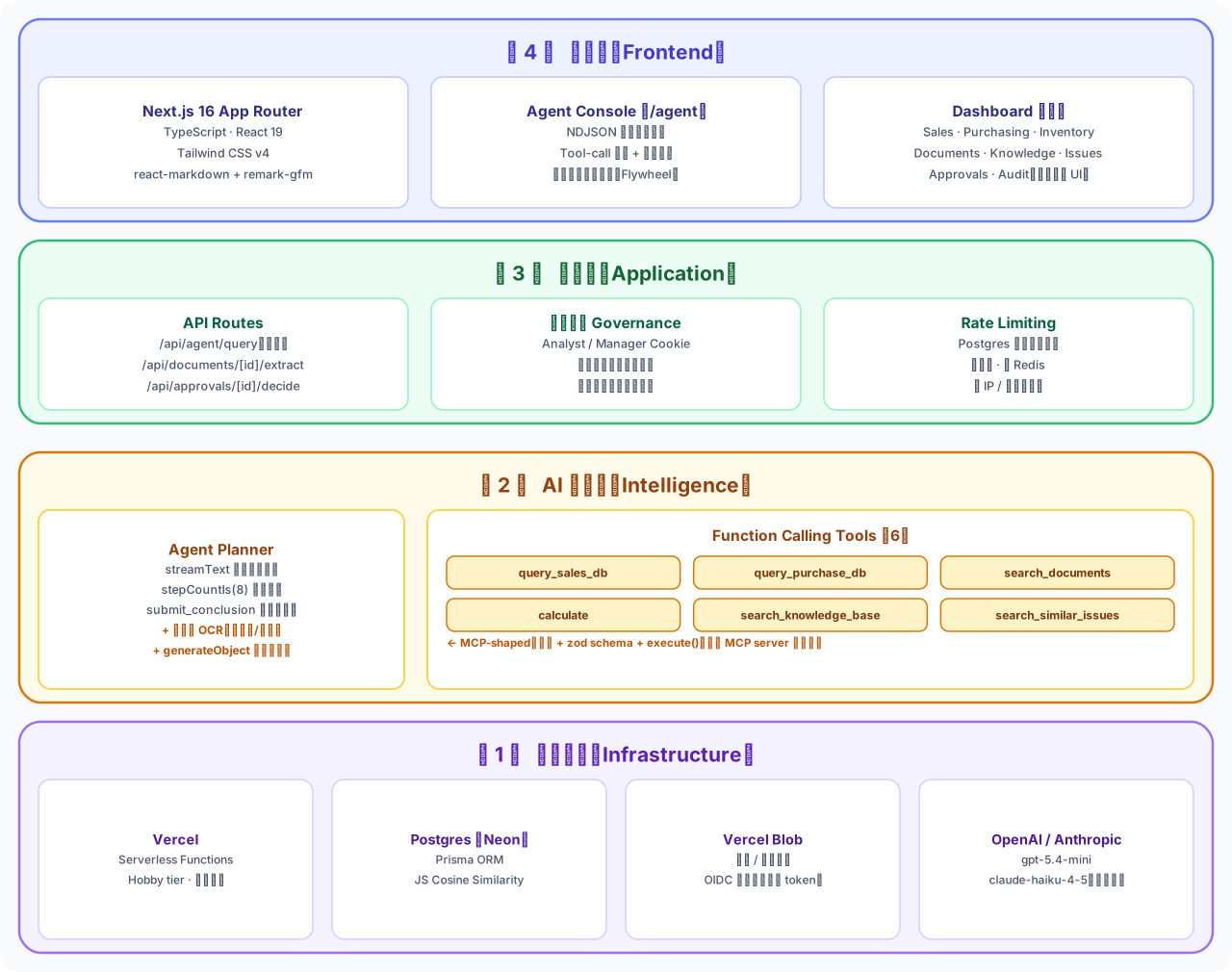
Knovyra tech stack diagram
4 layers: Frontend (Next.js 16 + Agent Console + Dashboards) / Application (API Routes + role governance + rate limiting) / Intelligence (Agent Planner + 6 function-calling tools) / Infrastructure (Vercel + Postgres/Neon + Vercel Blob + OpenAI/Anthropic, swappable)

Frontend

Next.js 16 App Router TypeScript / React 19 Tailwind CSS v4 react-markdown + remark-gfm

Application

Next.js API Routes Role Governance Postgres Rate Limiting

AI / Intelligence

Vercel AI SDK (streamText) 6 Function-Calling Tools generateObject Multimodal OCR

Infrastructure

Vercel Serverless Postgres (Neon) + Prisma Vercel Blob OpenAI / Anthropic

Engineering Trade-offs

Cost
    Speed
      Accuracy
        Stability

          My Role

          Solo Full-Stack & AI Engineer

          Built entirely alone, end to end: the data model (Prisma schema across 5 groups), a reproducible synthetic-data generator (fixed RNG seed, with 5 deliberately planted anomaly stories), the agent tool-call loop and its 6 tools, the document-extraction and rule-based cross-validation pipeline, the Knowledge Flywheel (similarity retrieval + reuse tracking), the governance layer (role permissions, approval queue, audit log), 9+ frontend pages and the UI/UX, deployment and CI, and all of the documentation (README, architecture-decision notes). No collaborators, no outside design files.

          Features

          Operations Agent

            Document Intelligence

              Knowledge Flywheel

                Jira-Style Issue Tracking

                  Governance & Audit

                    Challenges & Solutions

                    1 OpenAI's strict structured-output mode rejects .optional() fields

                    Problem

                    Solution

                    2 A Prisma unique constraint blocked a second approval request

                    Problem

                    Solution

                    3 The "plan" kept reappearing in the stream

                    Problem

                    Solution

                    4 Long JSON strings blew out the tool-call cards

                    Problem

                    Solution

                    5 Unrealistic synthetic-data growth buried a planted anomaly

                    Problem

                    Solution

                    6 The ts-node seed script couldn't resolve @/ path aliases

                    Problem

                    Solution

                    7 A private repo link ended up on the public homepage

                    Problem

                    Solution

                    Expected Impact & System Value

                    This is a portfolio demo with no real production traffic, so I won't quote "N hours saved" or "N% more efficient" numbers with no real users behind them. What's honest to say instead is what this system concretely proves:

                    All 5 planted anomalies, found with correct evidence

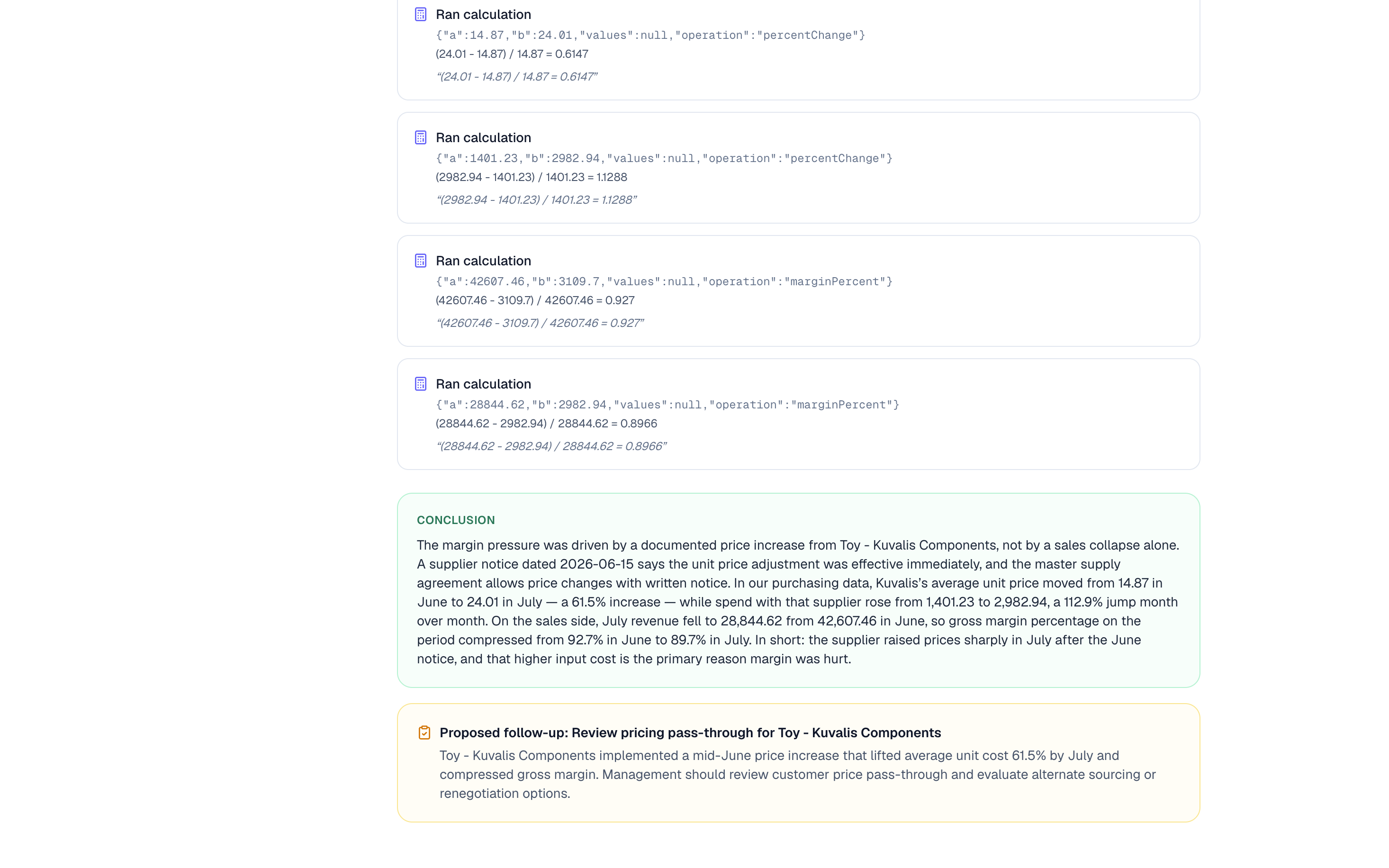
                    Supplier price hikes, customer churn, inventory buildup, stockouts, chronically late supplier deliveries — the agent surfaces every one of them, citing the actual database numbers and document content that produced the answer, not a lucky guess.

                    The governance loop runs end to end

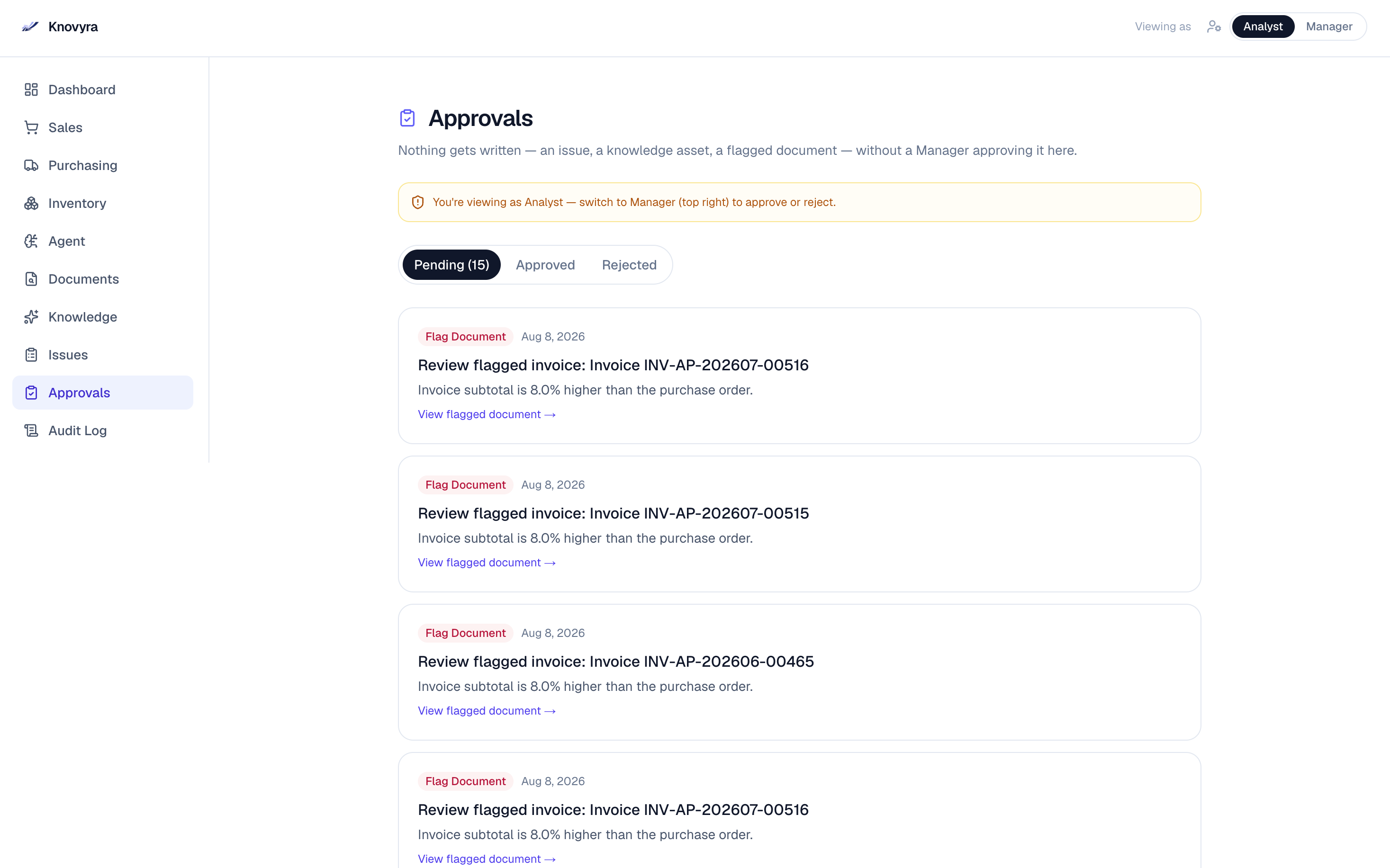
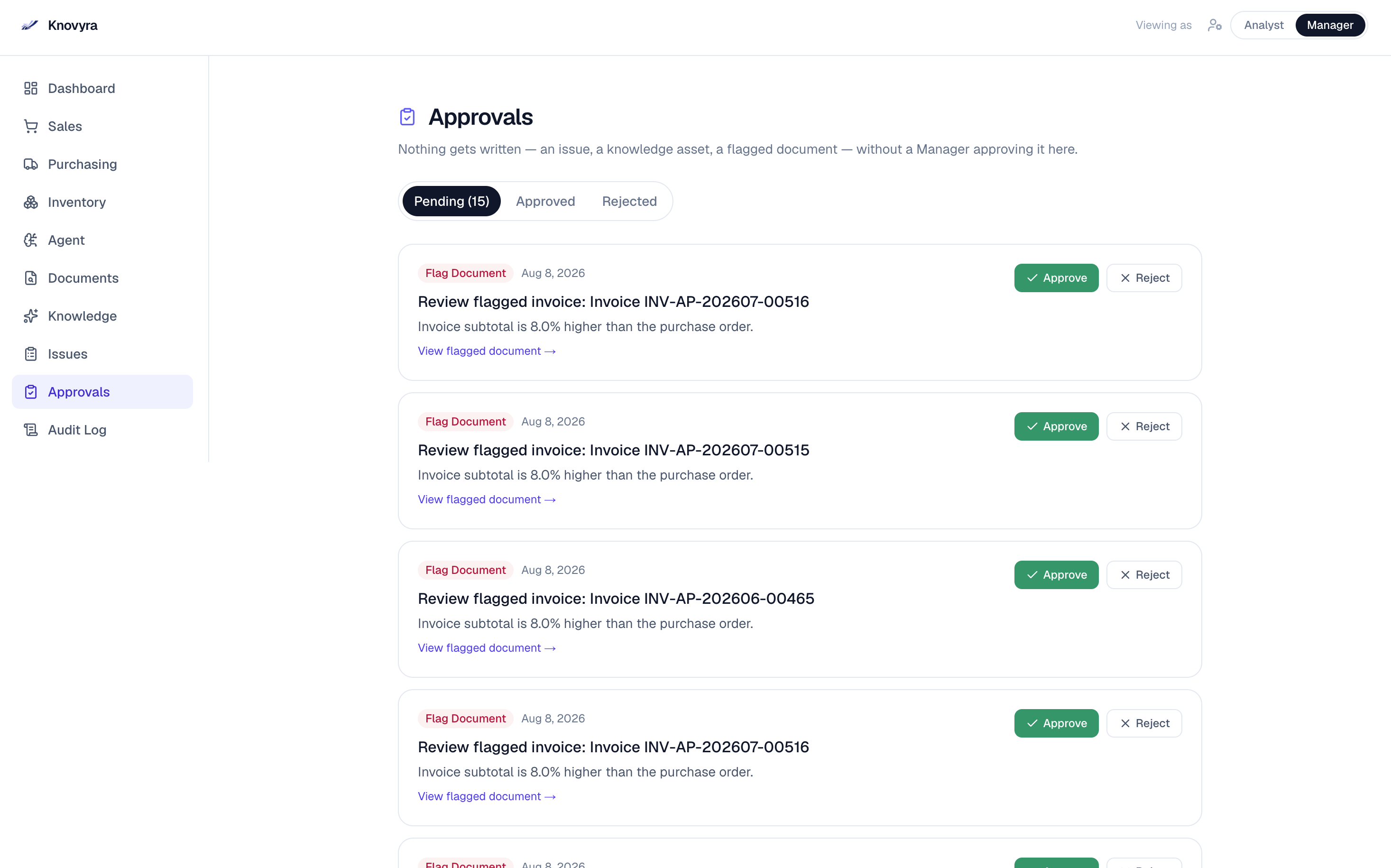
                    Propose → approve → write → audit — all four steps have real, queryable data behind them. It's not a UI mockup of a flow that doesn't actually happen.

                    Knowledge reuse verified in practice

                    Resolve an issue, write down the fix — ask a similar question later, and the agent actually cites that resolution and declines to suggest a duplicate. That's the Jira-style historical-case integration working at small scale, not a claim on a slide.

                    Document intelligence holds up on messy input

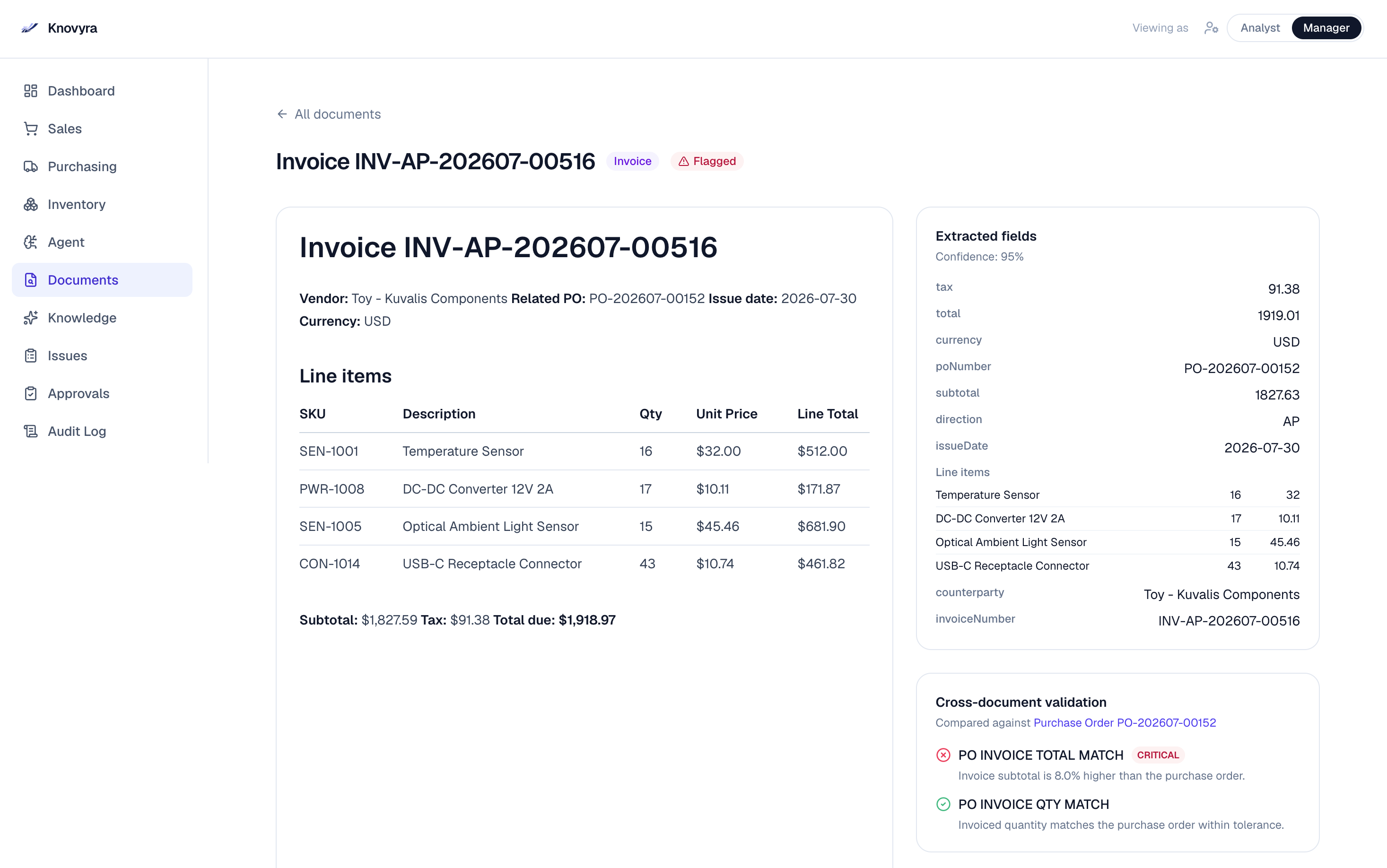
                    69 synthetic documents mix clean tables, forwarded-email-style casual invoices, handwritten-style receiving slips, and scanned images/screenshots — run through real vision OCR plus structured extraction, not just the cleanest format.

                    A working answer to a real integration question

                    The combination of an MCP-shaped tool layer, enforced citations, and an approval gate is a direct answer to "how do you bring agentic AI into an existing system like Jira without losing control" — answered with a running system, not a slide.
                    Screen Walkthrough

                    The screens below follow one real investigation from the live demo, start to finish.

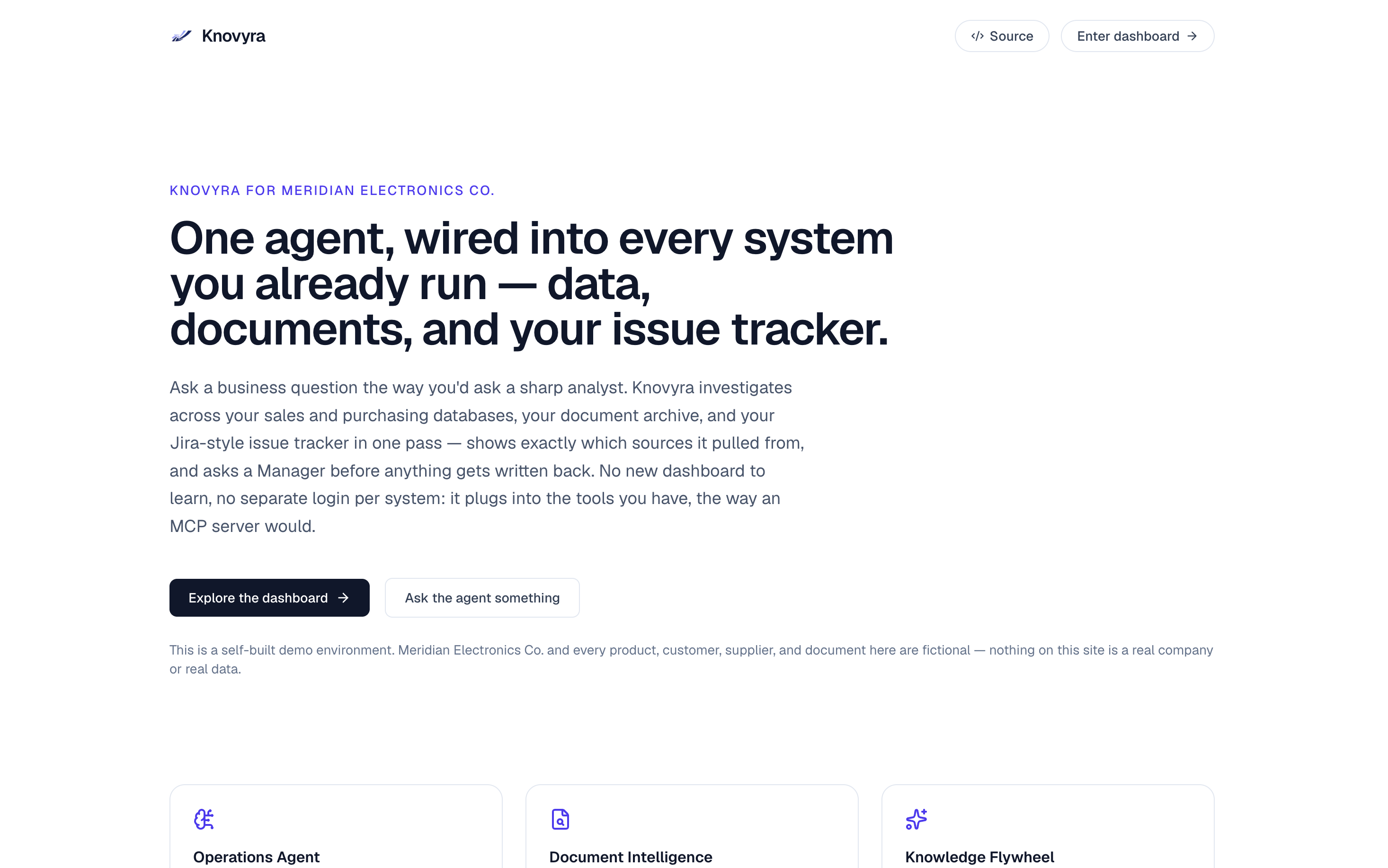
                    Knovyra homepage
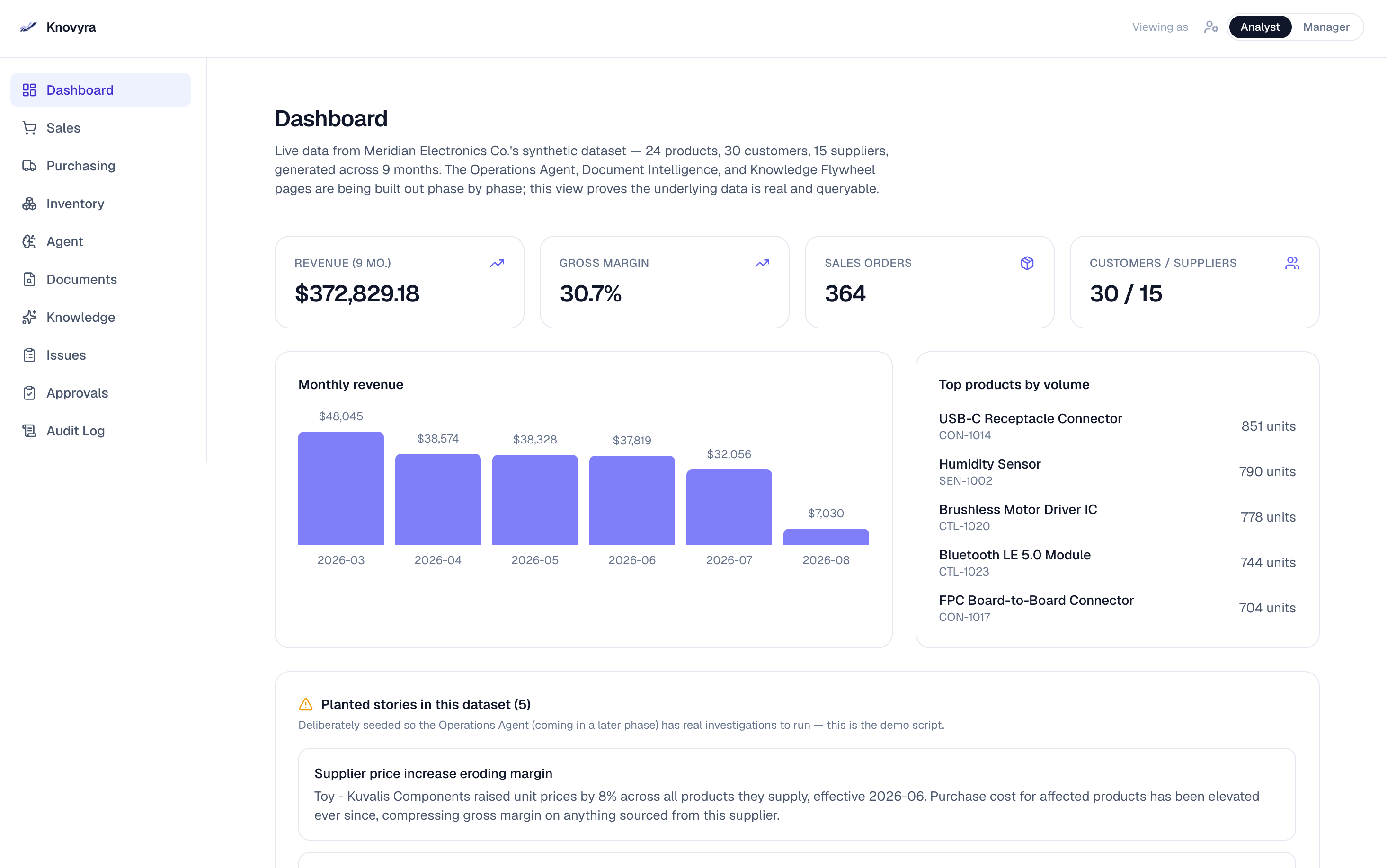
                    Dashboard with live synthetic data
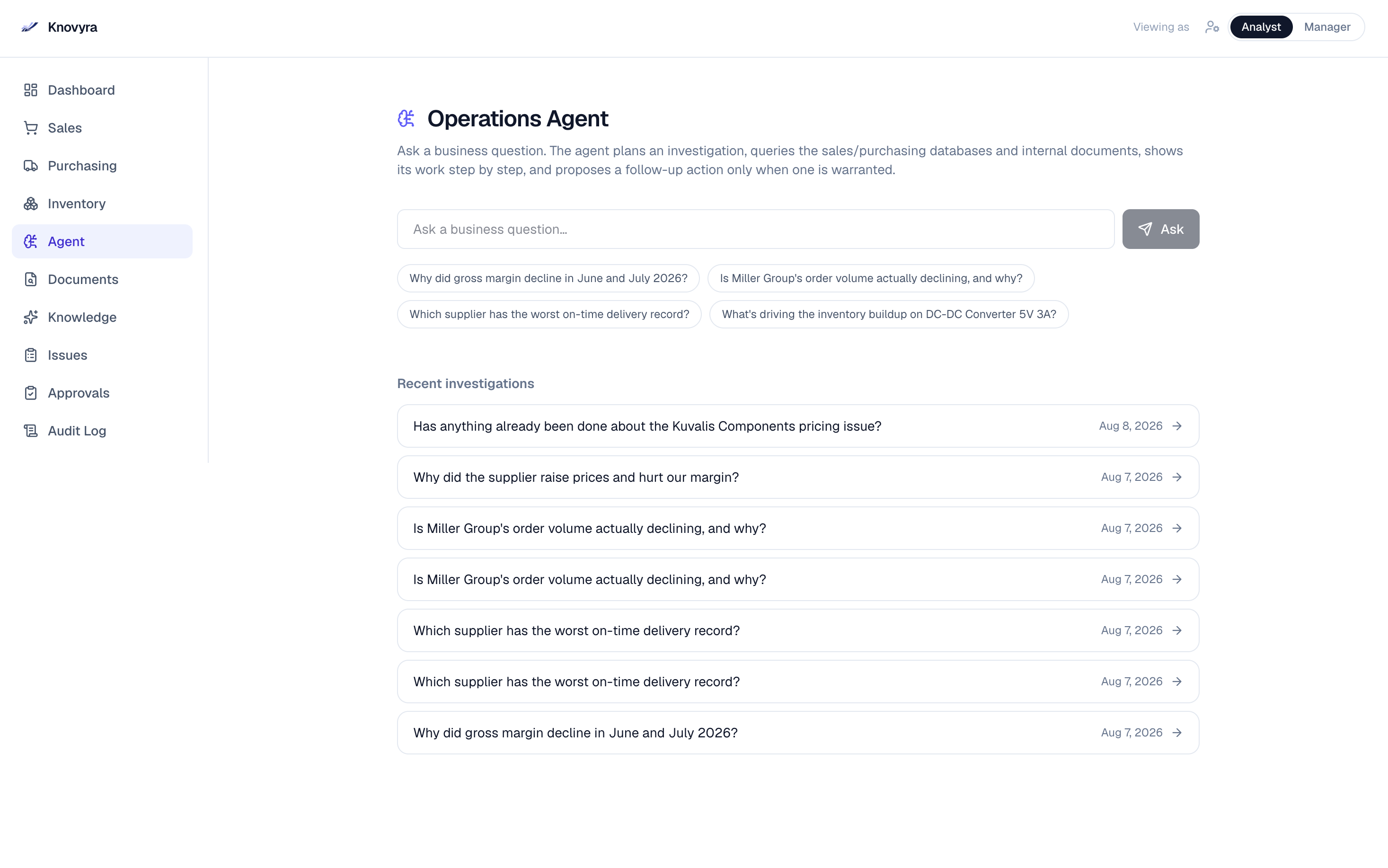
                    Agent landing screen
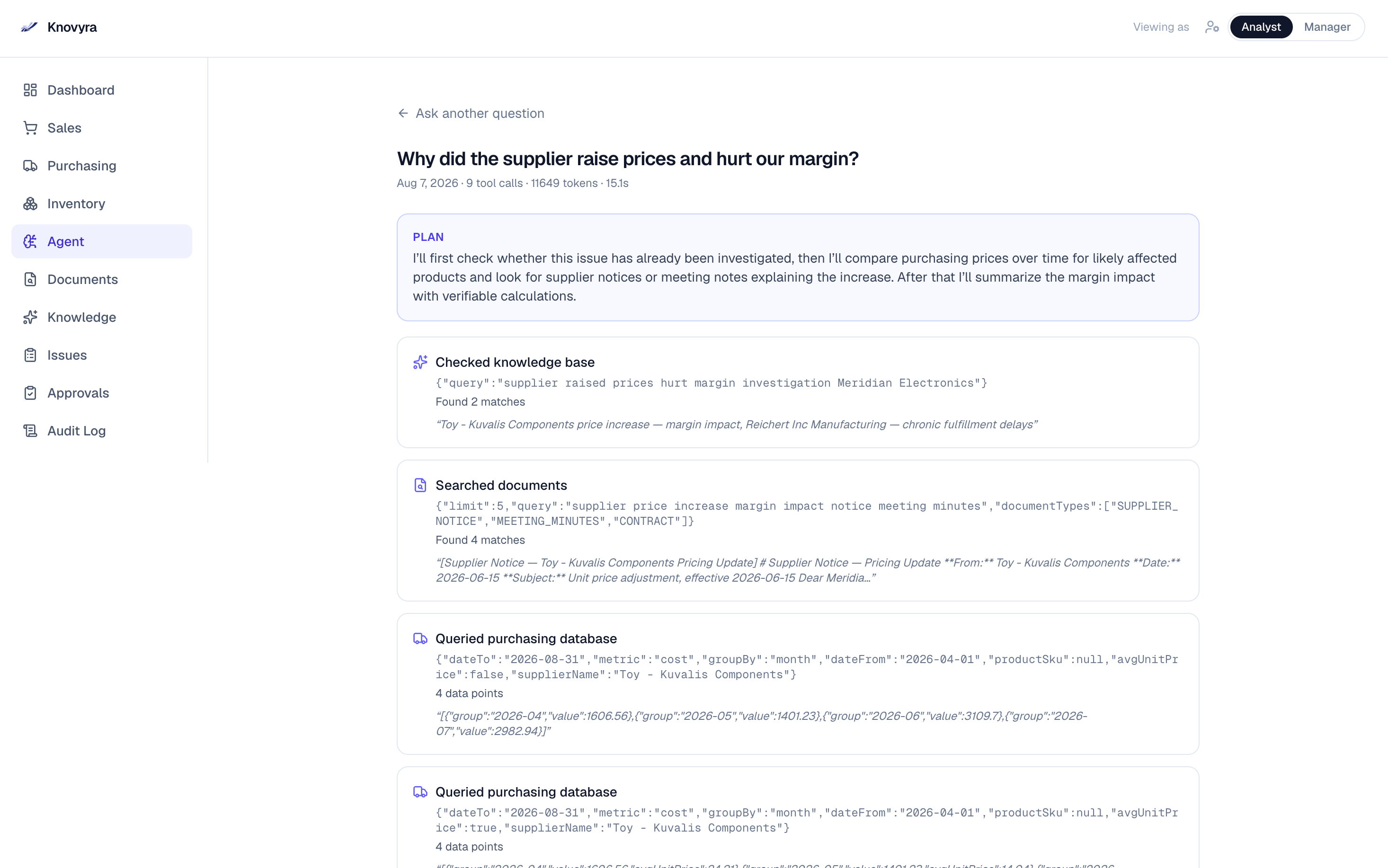
                    Agent investigation in progress
                    Agent final answer and proposed follow-up
                    Approvals queue, Analyst view
                    Approvals queue, Manager view
                    Flagged invoice with cross-document validation
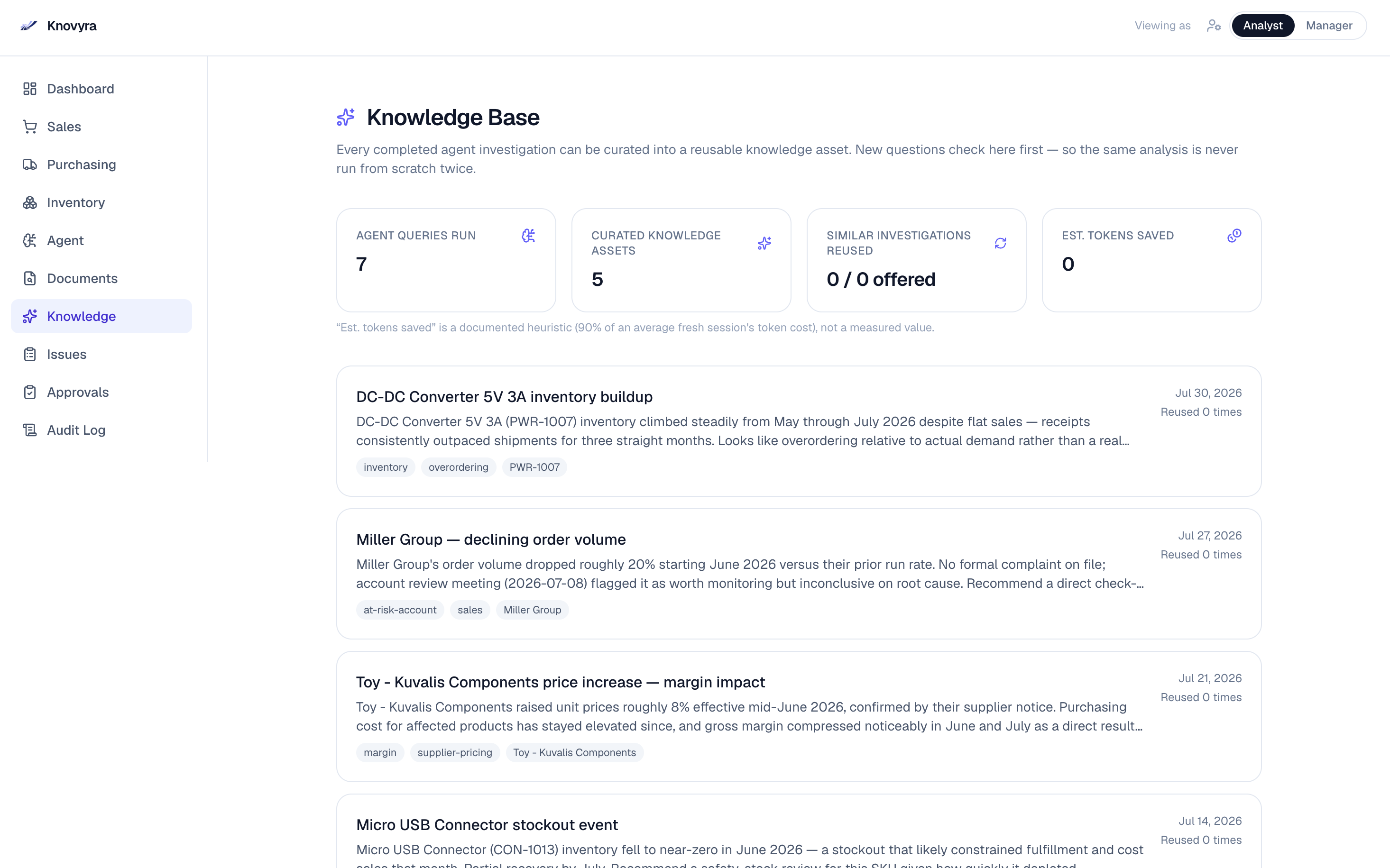
                    Knowledge base and reuse stats
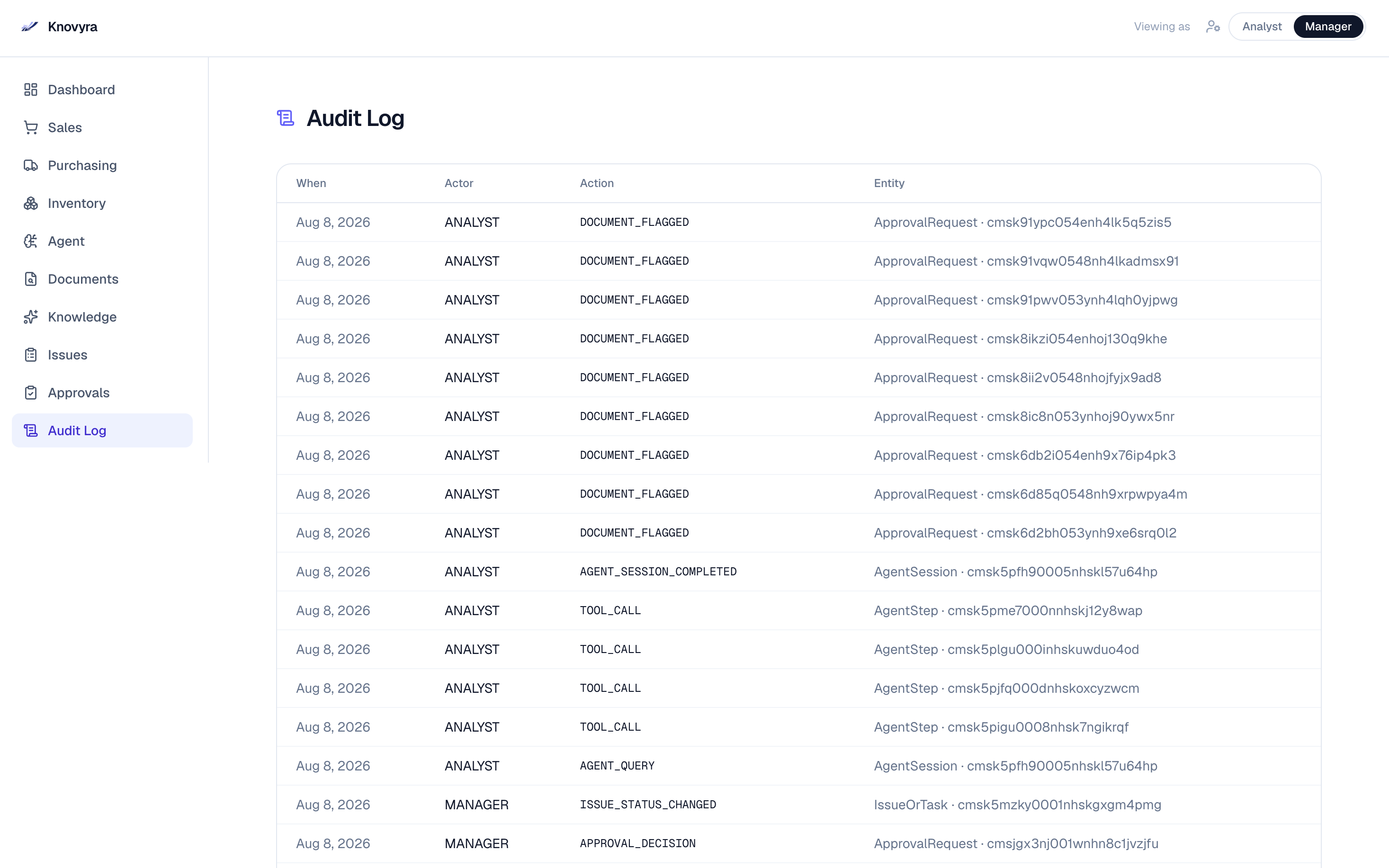
                    Audit log